
|
|
|
|
| |
|
 |
Plimoth Plantation – Plimoth Plantation is a living history museum, a re-creation of the first settlement at Plymouth, staffed with people dressed in period clothing, and doing tasks, such as hoeing the corn crop, smoking and drying fish, cooking a typical stew over the fire, tending cows, building a store house, baking bread or husking corn. |
|
|
|
|
|
|
|
Wampanoag Homesite – Step into a Wampanoag village and garden in the 1600’s – the people you’ll meet are members of the Wampanoag tribe today. Dome shaped houses are covered with bark and reed mats, dugouts are made by burning out the center of a long, corn, beans and squash are grown in the field. Kids can go inside a typical house, find out about hunting and fishing, and watch women cooking food over the fire |
|
|
|
|
| |
|
|
Eel River nature walk – From the Homesite, follow the trail that goes right along river, ringed with reeds. Looking over the river, it’s easy to imagine what it was like in the 17th century. |
|
|
|
|
|
|
|
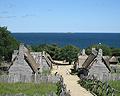
1627 English Village – Walk through the street of the Plymouth settlement, rough-hewn houses along dirt streets, enclosed in a fortified wooden wall (palisade). Start at the top of the hill with the fort, which also doubled as meeting house and place of worship. Climb up the fort for a bird’s eye view of the village and ocean beyond. Wander down the streets, go inside houses and kitchen gardens, ask questions of any of the staff, and they’ll explain what they’re doing. We had to stop into the Howland house – John Howland was an indentured servant who married Elizabeth Tilley, they had ten children, all of whom survived. |
|
|
|
|
| |
|
|
Crafts Corner – Watch demonstrations of wood working, weaving, throwing pots and firing pottery in a 17th century style wood-fired kiln. There are picnic tables outside the Crafts Corner. |
|
|
|
|
| |
|
 |
Plymouth Town – |
|
|
|
|
|
|
|
Mayflower II – In 1957, England built a remarkable replica of the Mayflower ship and sailed it to Plymouth. Walking onto the Mayflower II is to feel the rocking of the boat under your feet and the wind in the sails. Go down to the lower deck where 102 people were squished into this small space for more than two months on the voyage. Kids can climb into the bunks (try getting your whole family in the bunk) or hold the whipstaff used for steering the ship. People in costume on the ship will answer questions about the passengers and crew of the Mayflower. |
|
|
|
|
| |
|
|
Plymouth Rock - No one is exactly sure there the Pilgrims landed at Plymouth Harbor, but according to local history, when the Pilgrims set foot on dry land, they stepped out on this granite rock. Enclosed in a fancy stone pavilion, the rock is engraved with the date 1620. |
|
|
|
|
| |
|
|
Leyden St. – Take a stroll up Leyden St. toward Burial Hill, the site of the original Plymouth settlement. The first fort (that is re-created at the Plimoth Plantation) was at the top of the hill, and Pilgrims are buried in the cemetery, but none of their original headstones remain. Each Friday in August, people dressed Pilgrims walk up Leyden St., knocking on doors that represent the houses of the original Pilgrims. |
|
|
|
|
|
|
|
Town Brook walking path – One reason the Pilgrims settled at Plymouth was a good source of water, the Town Brook. Today, it’s a lovely spot to walk, starting at Brewster Gardens on Water St., following nice wide paths (okay for a stroller) along the creek. Walk all the way up to Jenny Grist Mill, a re-creation of the first grist mill with working waterwheel. At the Grist Mill, have an ice cream at the Mill Stone Creamery. |
|
|
|
|
| |
|
|
Historic Houses – |
|
|
|
|
|
|
|
- Howland House – This house was built in 1667 by Jabez Howland, John Howland’s son. John and Elizabeth Howland spent their winters at this home. John Howland died in 1672 at this home, at age 80, and was one of the last surviving Pilgrims. |
|
|
|
| |
|
Take a guided tour of the house, where you can see the original 17th century wattle and daub wall and stones in the entryway. In the great room, where the family gathered, there's big hearth and low chair where the mother would have sat most of the day cooking, as well as a fold-down bed (space was at a premium). |
|
|
|
|
| |
|
|
- Richard Sparrow House – This is the oldest house in Plymouth, built in 1640 by Richard Sparrow. There are tours of the house, open every day except Wednesday. (This house is right close to the Grist Mill, so stop off after you’ve had an ice cream.) |
|
|
|
|
| |
|
|
Harbor Cruises – On a nice day, take a boat ride out into Plymouth Harbor. Pick up these boats at the town wharf. |
|
|
|
|
| |
|
|
- Pirate Cruise – Take a one hour Pirate Cruise by Lobster Tales – a cute little boat, music, pirate goodies, hauling up a lobster trap are a big hit with younger kids (highly recommended by a grandmother who lives locally). May to October. |
|
|
|
|
| |
|
|
- Captain John Boats – Captain John has whale watching cruises (about 3 – 4 hours), where you'll see humpback, minke or fin whales, dolphins or porpoises. One hour harbor cruises are also fun, waterside views of the Mayflower II and the wharf. |
|
|
|
|
| |
|
|
Picnics – Bring your lunch or grab food to go, and have a picnic on the grassy areas. There are benches and picnic tables all along the harbor, from Plymouth Rock to the breakwater. |
|
|
|
|
| |
|
 |
Cranberry Farm (Carver, just west of Plymouth) – Growing cranberries is a local tradition in the area. Take a tour of a cranberry bog, try sorting cranberries, along with cranberry juice samples. May to September, Flax Pond Farms. |
|
|
|
|
 |
 |
|
|
|
|
|
|
|
|
| |
|
|
 |
|
Fascinating re-creation of the voyage of the Mayflower – the passengers arrive on board (there were about 30 children), provisions are loaded, storms and rough conditions at sea, charting a course, landfall at Plymouth. Illustrated with photographs from the Mayflower II and Plimoth Plantation. (Chapter book)
|
|
|
|
|
|
| |
|
|
|
Imagine
yourself in 1620 who sailed on the Mayflower, what could you take with your, where
would you sleep, how could you keep clean, where could you get into trouble on the ship? Answers to all these
questions and more. Lively illustrations. (Chapter book)
|
|
|
|
|
|
|
|
|
|
|
|
| |
|
|
 |
|
Marvelous
rhyming descriptions of the Mayflower voyage, gorgeously
illustrated on each page. "Harbor,
galleon, Captain, crew. Sails unfurling, ocean blue." (Picture book)
|
|
|
|
|
|
| |
|
|
|
Explore the life of a Wampanoag Indian boy in the 1620’s, going out to hunt, fishing from a dugout canoe, making an arrow that shoots straight and true, learning stillness in the forest. Illustrated with photographs from the Wampanoag Homesite at the Plimoth Plantation. (Picture book)
Wampanoag traditions continue today a boy and his grandfather prepare for a clambake (appanaug), a celebration to honor an elder of the tribe: Clambake
|
|
|
|
|
|
|
|
|
|
|
|
| |
|
|
 |
|
A day in the life of Pilgrim girl getting dressed at dawn, serving her parents breakfast, feeding the chickens, preparing a midday meal of cornbread and stew, doing her lessons, fetching water from the well. Photographed at Plimoth Plantation. (Picture book)
|
|
|
|
|
|
| |
|
|
|
A look at the Plymouth colony with the soldier Myles Standish as the central character. His job was to teach the colonists to protect themselves in the New World, and when things went badly, Myles’ face was so red he was called “Captaine Shrimpe.” A fun read for older kids. (Chapter book)
|
|
|
|
|
|
|
|
|
|
|
|
| |
|
|
 |
|
Pilgrims' story in rhyming verse, from hardships and disease to planting corn and tending gardens, a plentiful harvest, and feast of thanksgiving. Lively, detailed illustrations. (Picture book)
|
|
|
|
|
|
| |
|
|
|
Fun account of what the Pilgrim's ate the first year, when they were always hungry. On the Mayflower there was moldy cheese and dried dried fish, corn pudding was eaten for breakfast, lunch and dinner, families ate right out of the cooking pot. Included are recipes for your own Pilgrim meal. (Chapter book, illustrations)
|
|
|
|
|
|
|
|
|
|
|
|
| |
|
|
 |
|
Touring the Mayflower II, three kids learn about a jewelry theft on the original voyage. Following clues, they find the necklace and solve a 400 year old mystery, but they’re trapped on the ship. (Easy reader)
|
|
|
|
|
|
| |
|
|
|
Jack and Annie are whirled back to 1621, where they meet with Squanto, Governor Bradford and Captain Standish, preparing for the harvest festival. But will there be a festival when the kids dump the turkey into the fire? (Easy reader)
|
|
|
|
|
|
|
|
|
|
|
|
| |
|
|
 |
|
Adventures of two troublemaker boys on the Mayflower – Johnny and Francis Billington. Based on actual accounts, the boys experiment with gunpowder and almost blow up the Mayflower; Johnny wanders off and ends up staying with a local Indian tribe for a month. Fresh and funny look at some real-life scamps. (Picture book)
|
|
|
|
|
|
| |
|
|

|
A Pilgrim girl discovers a stray cat aboard the Mayflower and cares for the cat during the voyage. The first year in Plymouth isn't easy for our cat and the settlers, but at the harvest celebration, there’s food for everyone, including a new batch of kittens. A warm, heartwarming story, perfect for younger kids, beautifully illustrated. (Picture book)
|
|
|
|
|
|
|
|
|
|
|
|
| |
|
|
 |
|
Kids at Plymouth had to be self-sufficient and did adult's work to make a new life. Here’s 30+ activities to try – learn about knots, sew an apron or rag rug, churn butter, make cornbread and hasty pudding, use a quill pen and homemade ink, stitch a sampler, play ninepins, and more. (Activity book)
|
|
|
|
|
|
| |
|
|
|
This is our favorite Plymouth book for older kids and parents alike. Reading this book, the story goes far beyond the first Thanksgiving, as Pilgrims and Indians struggled to adapt, in peace and war, to the changes in a new world. (Chapter book)
|
|
|
|
|
|
|
|
|
|
|
|
| |
|
|
 |
|
The
Pilgrims' first year in America, surviving the first winter, rhythms of village life, and a
bounteous harvest festival. Richly-hued paintings
by American artist N.C. Wyeth remember the Pilgrim experience. (Picture book)
|
|
|
|
|
|
|
|
|
|
|
|
|
More children's books on other Massachusetts pages. |
|
|
|
|